
Mandatory Mahram Requirement: A Pretext for Depriving Women of Education and Professional Opportunities
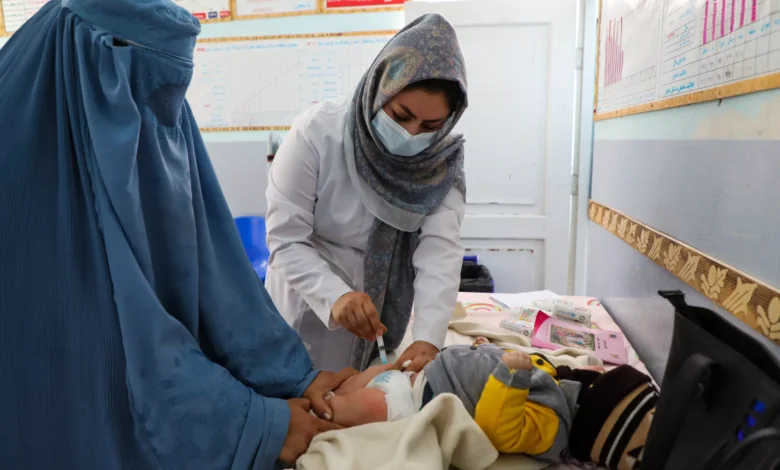
Recent statements by Taliban Officials requiring male doctors to act as “mahram” (male guardian) for female patients have triggered renewed legal, humanitarian, and public health concerns. While the policy appears to offer a religiously framed solution to the shortage of female doctors, it in fact reflects a much deeper crisis, one created by restrictive policies that have systematically excluded women from education and professional life.
This analysis demonstrates how policies limiting women’s access to education and employment have created the very necessity to justify mandatory guardianship. The result is a direct threat to the health, dignity, and rights of Afghan women.
When girls are barred from studying medicine and women are pushed out of the healthcare system, a shortage of female professionals becomes inevitable. In such circumstances, turning male doctors into “mandatory mahrams” for female patients is not a solution, it is evidence of structural failure.
In Islamic jurisprudence, the concept of mahram is traditionally limited to specific familial or sharia defined relationships. Expanding this concept to designate male doctors as guardians for female patients departs significantly from established traditional definitions. Rather than addressing a genuine religious necessity, this measure is a consequence of educational restrictions.
A fundamental question arises: Can a crisis created by policy itself be labeled an “emergency”? When universities are closed to women and the training of female doctors is disrupted, the resulting shortage is a predictable outcome. In Islamic legal principles, one who creates an emergency cannot later invoke it to justify changing established rules. Therefore, “mandatory mahram” policies lack both legal and logical legitimacy.
A Healthcare System Under Strain
Banning women from studying medicine has directly harmed public health. Even before recent developments, Afghanistan faced a severe shortage of female doctors, midwives, and nurses, particularly in rural areas. Now continued restrictions have pushed the system toward crisis.
Universities and higher education institutions that could train a new generation of female professionals have effectively been removed from the pipeline of knowledge production. The consequences are reduced healthcare capacity, pressure on treatment centers, and growing mistrust among female patients toward the system.
In rural communities, the absence of female doctors discourages many women from seeking even basic medical examinations. This is not merely an individual hardship; it shows the gradual erosion of healthcare infrastructure.
Contradictory Policies and Social Consequences
Current policies place women in a double bind:
Girls are prohibited from pursuing specialized education. Yet due to the absence of female professionals, women are expected to accept treatment by male doctors in private examination.
Women’s privacy has thus become a result of political decisions. The logical path to preserving women’s dignity and health lies in strengthening the presence of female professionals, not redefining guardianship.
Moreover, restrictions extend beyond healthcare. Women’s employment in government and non-governmental organizations, media participation, travel without a mahram (male guardian), civic activity, and access to public spaces have all been limited.
Humanitarian Consequences
Afghanistan previously recorded one of the highest maternal mortality rates in the region. Reduced access to quality healthcare and female specialists now raises serious concerns that these rates could rise again.
In many areas, women avoid visiting male doctors because of cultural sensitivities or fear of social judgment. Without alternatives, delays in diagnosis, pregnancy complications, and preventable deaths increase.
According to data from the World Food Programme (WFP) and the World Health Organization, the shortage of female doctors in Afghanistan has reached over 40 percent. In some provinces, maternal mortality surpasses 800 deaths per 100,000 live births.
International Response and the Need for Action
Thus far, the international response has largely been limited to statements of concern. Silence or fragmented action risks normalizing restrictions. The longer such policies continue without political cost, the more permanent they may become.
Attempts to justify these policies through religious framing may also erode public trust in religious institutions. Many Islamic scholars across the world emphasize the importance of women’s education, particularly in medicine and healthcare.
Proposed Steps Forward
To prevent further deterioration, urgent measures are required:
- Lift educational bans and reopen schools and universities to girls.
- Establish short-term alternatives such as online and remote medical training.
- Strengthen the presence of women in healthcare facilities and professional development programs.
- Ensure meaningful international support and monitoring of internal policies to prevent illegal restrictions.
- Raise community awareness about the importance of women’s health and rights.
Conclusion
Excluding women from education and professional participation does not only violate their rights; it weakens knowledge production, economic development, and social stability. Afghanistan needs female doctors, teachers, and specialists, not new interpretations to justify the mandatory male guardianship.
History will judge whether these restrictions were addressed or met with silence. But the health, education, and dignity of Afghan women must not be sacrificed to political decisions.
By Jahanzeb Wesa, Human Rights Activist and Freelance Journalist
February 18, 2026
short link